
Traffic enforcement solutions
Continuous Enforcement for Complex Road Networks.
Modern highways and urban intersections require consistent visibility across multiple lanes, directions and traffic conditions. NumidEye develops automated roadside systems that extend enforcement coverage while providing accurate vehicle tracking, identification and evidential capture.
The enforcement challenge
Multi-lane highways
Complex traffic flow
High-speed roads require simultaneous tracking across multiple lanes, directions and vehicle classes.
Urban intersections
Multiple violation types
Signal-controlled junctions require precise association between vehicle movement, signal state and evidential imagery.
Continuous coverage
Enforcement beyond patrols
Automated roadside systems provide consistent monitoring while allowing officers to focus on review, intervention and wider traffic operations.
Multi-lane speed enforcement
High-speed arterial roads often combine multiple lanes, mixed vehicle classes and traffic moving in both directions. Effective enforcement requires accurate vehicle-to-lane association rather than isolated detection points.
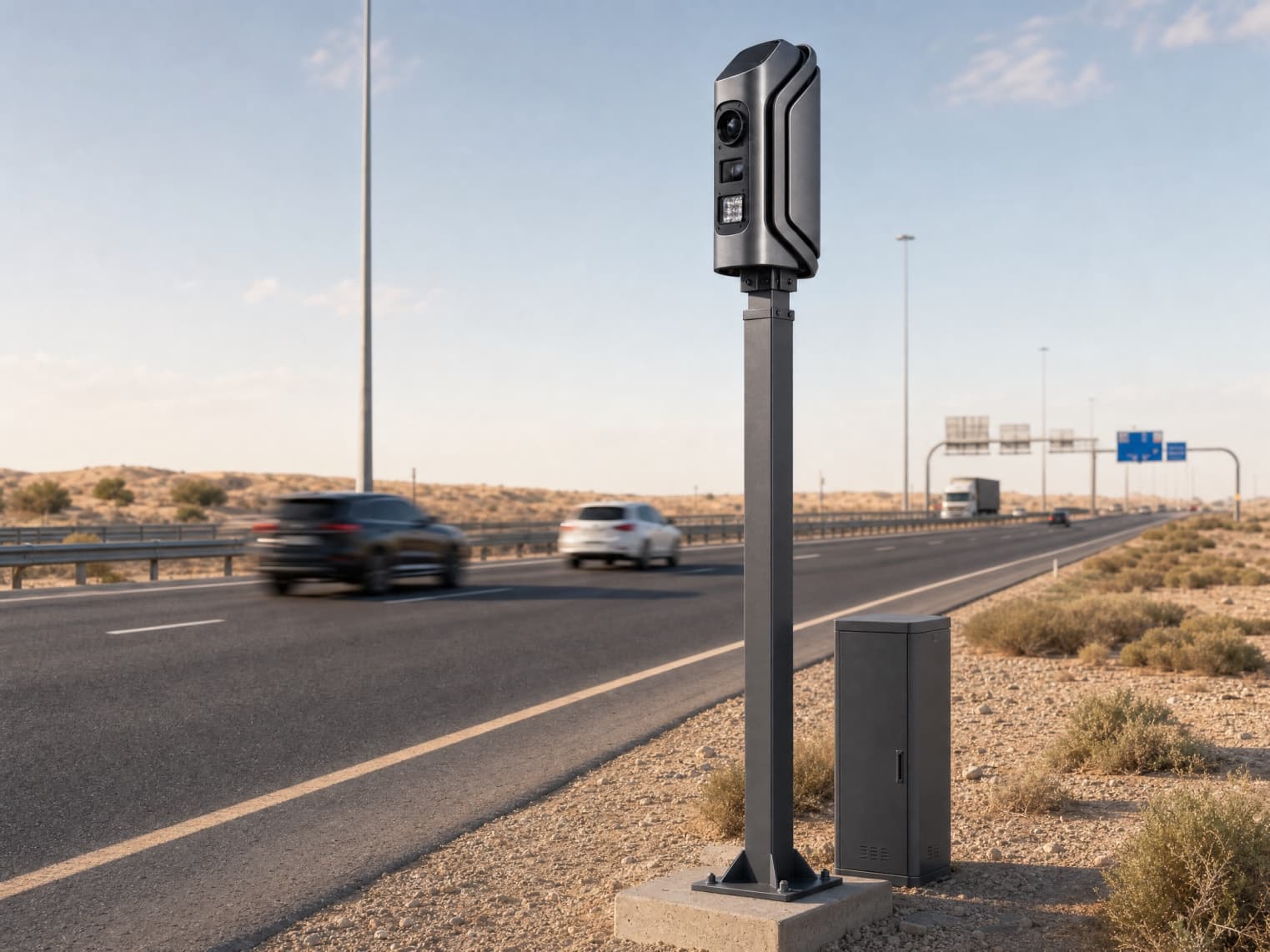
Sentinel-MX provides continuous radar-based tracking across up to six lanes, associating speed, lane, direction and vehicle information with synchronized enforcement imagery.
Red-light & stop-line enforcement
Signal-controlled intersections require accurate determination of vehicle position, movement and signal state. Multi-lane approaches and turning movements make reliable event association especially important.
Sentinel-MX combines vehicle tracking with video-based signal and stop-line monitoring to identify red-light events and capture synchronized evidence for review.
No invasive infrastructure — Video-based red-light enforcement can be deployed without invasive roadway civil works.
Lane & direction enforcement
Dedicated lanes, controlled shoulders and directional traffic rules improve safety and traffic flow, but effective enforcement requires continuous understanding of vehicle trajectories.
- Wrong-way movement
- Emergency-lane use
- Configurable lane-based violations
- Continuous trajectory tracking
Mobile phone & seatbelt detection
NumidEye is developing a dedicated elevated imaging platform for automated detection of mobile-phone use, seatbelt violations and selected unsafe in-cabin behaviours. The platform is intended to integrate with the existing Atlas evidence workflow.
Concept — elevated imaging platform
Future applications
Extending the platform
NumidEye is exploring additional roadway-safety applications built around the same principles of sensing, imaging, local processing and centralized operational review.
School-zone monitoring
Time-aware monitoring around reduced-speed environments.
Pedestrian-crossing awareness
Analysis of vehicle and pedestrian movement around designated crossings.
Roadway analytics
Trajectory and classification data supporting broader traffic understanding.
Automated enforcement extends operational coverage.
Fixed roadside systems complement conventional traffic operations by providing continuous monitoring, consistent evidence capture and centralized review.
| Requirement | Patrol-based | Automated roadside |
|---|---|---|
| Coverage | Dependent on officer presence | Continuous at equipped locations |
| Multi-lane monitoring | Operationally demanding | Simultaneous lane-aware tracking |
| Day & night operation | Resource dependent | Continuous sensing and imaging |
| Evidence association | May require manual correlation | Event and imagery automatically associated |
| Network interruption | Connectivity may interrupt workflow | Local retention and later synchronization |
| Device monitoring | Distributed equipment checks | Centralized health and status visibility |
| Review workflow | Varies by operating process | Centralized through Atlas |
Pilots & technical evaluation
Discuss your enforcement requirements.
NumidEye works with traffic authorities, road operators and integration partners to evaluate roadway requirements, deployment configurations and integration needs.
Site assessment • Deployment planning • Integration support